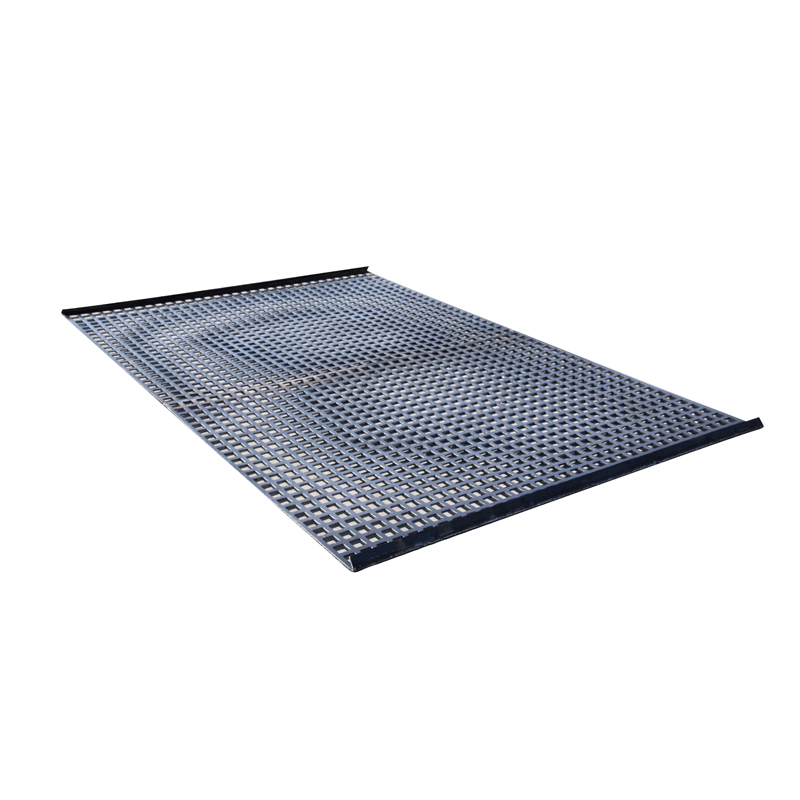
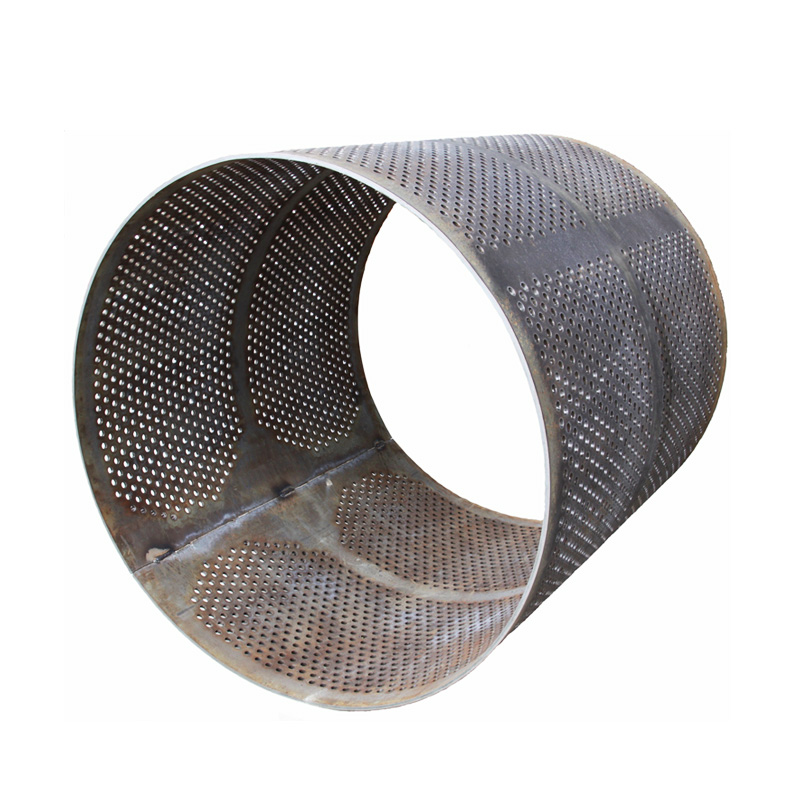
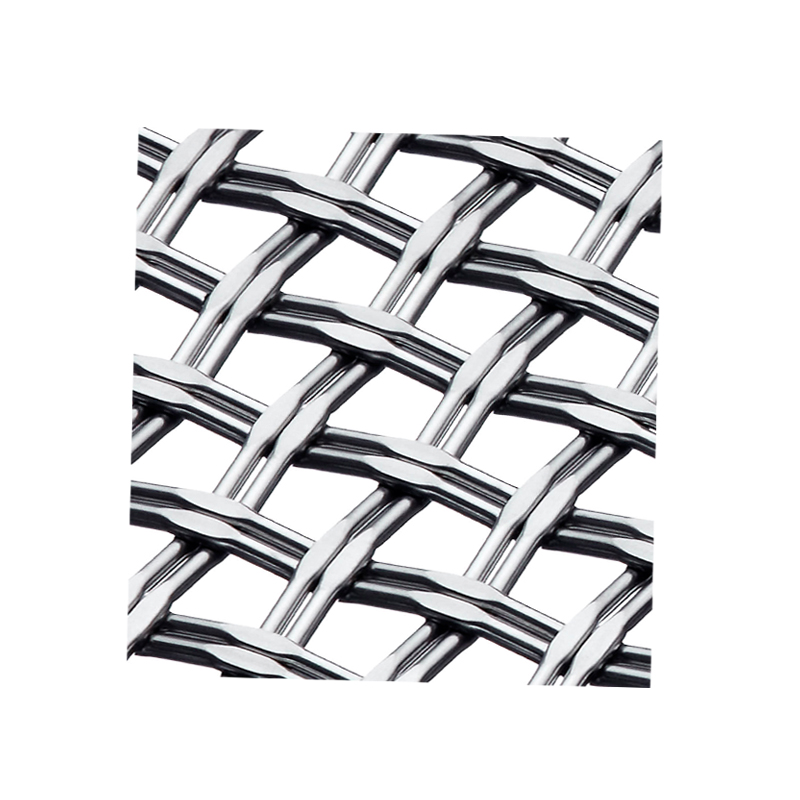
Perforated metal is a type of metal mesh product formed by punching holes in the surface of a metal sheet using stamping equipment. It is widely used in building decoration, machinery protection, screening and filtration, and ventilation equipment. In actual production, some customers find that perforated metal mesh is not completely flat after processing, but exhibits slight bending, warping, or deformation.
So, why does perforated metal mesh bend and deform after production? This is mainly related to the changes in material stress during the stamping process, the thickness of the sheet metal, the hole design, and the manufacturing process.
Internal stress generated during stamping leads to deformation.
The production process of perforated metal mesh is essentially a metal stamping process. When a stamping die acts at high speed on a metal sheet, localized areas of the sheet are subjected to enormous shear forces, causing some material to be punched away, thus forming holes.
During this process, the stress distribution within the metal changes. The originally uniform sheet structure, after the processing of numerous holes, loses its original support in some areas, while the remaining areas must bear the internal stress again.
If these stresses are not released in time, they will cause varying degrees of deformation in the sheet metal, such as:
The sheet surface bends to one side;
Edge warping occurs;
The entire sheet is no longer completely flat.
Especially in perforated sheets with a large aperture ratio, due to the removal of a large amount of material, the overall rigidity of the sheet decreases, making deformation more likely.
Sheet thickness affects the flatness of perforated sheets.
The thickness of the raw material used in perforated sheets is one of the important factors affecting product deformation.
Generally, thicker metal sheets have better rigidity and can maintain better flatness during the punching process. Thinner sheets, due to their weaker self-supporting capacity, are more prone to bending under punching pressure.
For example:
Sheets thinner than 1mm are more prone to wavy deformation after punching;
Sheets thicker than 3mm generally have better stability.
Therefore, in projects with high flatness requirements, customers usually choose thicker sheets to reduce the risk of processing deformation.
Hole shape and aperture ratio affect the degree of deformation.
The hole shape design of the perforated sheet also affects the flatness of the final product.
Generally, a higher open area ratio results in a larger area of sheet metal removed, less remaining metal, and consequently, reduced overall strength and rigidity.
For example:
Small-diameter, high-density perforated metal sheets typically exhibit better stability; large-diameter, high-open-area perforated metal sheets are more prone to deformation.
Furthermore, different hole shapes also produce different stress distributions.
For instance, round-hole perforated metal sheets tend to maintain flatness more easily due to more uniform stress distribution; while oblong holes or special hole arrangements, due to different material removal directions, may be more prone to localized deformation.
Punching sequence and production equipment affect product quality.
Besides material factors, the production process also affects the flatness of the perforated metal sheet.
During production, unstable equipment pressure control or improper die clearance settings can lead to uneven stress on the sheet metal.
Professional perforated metal sheet production typically employs:
Precision punching equipment;
Appropriate die clearance;
Optimized punching arrangement;
Subsequent leveling processes.
These methods effectively reduce deformation during processing.
How to Improve the Bending and Deformation Problem of Perforated Metal Mesh?
To improve the flatness of perforated metal mesh, manufacturers typically take the following measures:
First, select an appropriate sheet thickness based on the product's intended use. If the customer has high flatness requirements, avoid selecting excessively thin sheets.
Second, when designing the perforation specifications, it is necessary to reasonably control the hole diameter, hole spacing, and opening ratio to avoid excessively reducing the sheet strength.
Additionally, after punching, the product can be corrected through a **leveling process**. Specialized leveling equipment applies reverse pressure to the sheet, restoring it to a more flat state.
For some high-requirement projects, such as building curtain walls and precision equipment protection, multiple adjustments are usually required to ensure the product meets customer requirements.
Slight bending or deformation of perforated metal mesh after processing is a relatively common phenomenon in metal stamping. The main reasons include internal stress generated during stamping, sheet thickness, hole design, opening ratio, and production processes.
High-quality perforated metal mesh requires not only the selection of suitable raw materials but also professional production equipment and mature processing technology. Through proper design, precision machining, and subsequent leveling, the flatness and performance of perforated metal sheets can be effectively improved.
As a professional metal mesh manufacturer, we can provide customized perforated metal sheet products according to different customer application needs, including material selection, hole design, size specifications, and surface treatment solutions, offering reliable metal mesh solutions for the construction, industrial, protection, and screening fields.